
Saturday | April 5, 2025
Dinosaur Tracks in Microbial Mats
Characteristics of Microbial Mat-Related Lagerstatten of Dinosaur Tracks in Sandy Tidal and Sabkha Deposits
Led by Dr. Paul C. Murphey & Maya Giannecchini
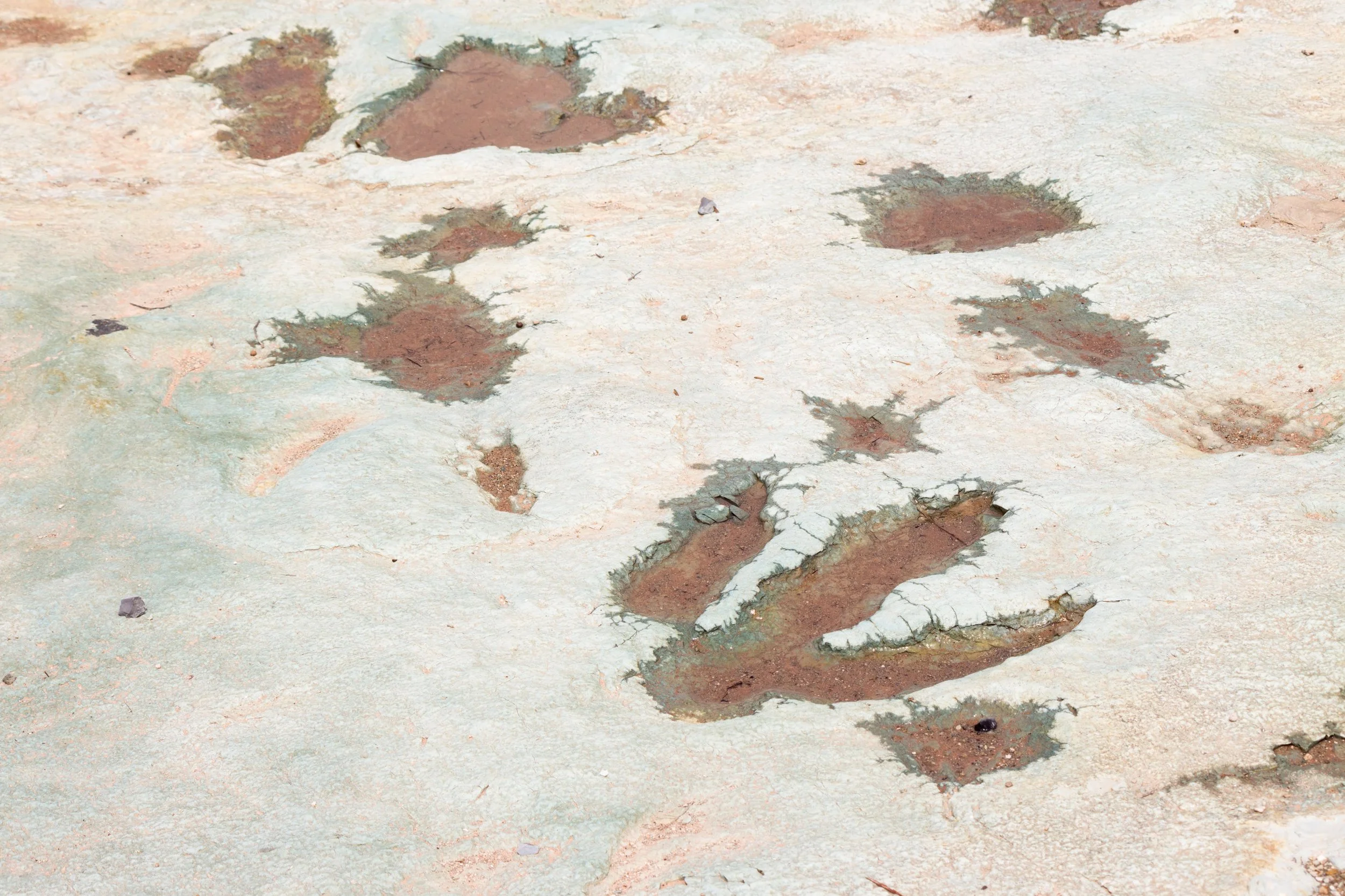
Join paleontologists and sedimentologists Paul Murphey and Maya Giannecchini on a survey of middle Jurassic elite dinosaur track sites located to the north of Moab. The track sites we will explore are preserved on the Moab Megatracksite surface, one of the largest surfaces preserving dinosaur footprints in the world. The dinosaur tracks were formed in sandy tidal and sabkha deposits directly overlying a thick sequence of coastal sand dunes, and beautifully illustrate the different types of microbial mat-mediated footprint preservation. During the trip, we will learn about the origins and geologic importance of microbial mats and the ways that they preserve ancient footprints, discuss what fossilized microbial mats reveal about ancient environmental conditions, and explore the stratigraphic and paleoenvironmental succession between the coastal sand dunes of the Moab Member of the Curtis Formation and the widespread microbial mat and dinosaur trackways capping the Moab Member at the base of the Summerville Member of the Morrison Formation.
This is a full-day field trip focused on a fascinating, niche aspect of paleontological study and is well suited for adults and teens with a keen interest in geosciences.
See below for important trip information.
-
Participants must drive their own vehicles.
Some clearance is necessary. 4WD is required in the event of wet weather.
-
A full tank of gas.
Lunch, water, sturdy shoes, binoculars, camera, and snacks.
-
Dr. Paul C. Murphey is a research associate at the San Diego Natural History Museum and the Denver Museum of Nature and Science, Principal Investigator at Paleo Resource Specialists, Alaska Paleontology Program Director at the Institute for Field Research, and Science Director at the Moab Giants Museum. His current research includes the effects of rapid global temperature increase on vertebrate communities during the Eocene, and 4D surface analysis of dinosaur trackways and the identification of dinosaur footprints using machine learning.
Maya Giannecchini graduated from Grand Valley State University, Michigan with a B.S. in geology and biology, and completed a summer field program at the University of Saint Andrews in Scotland. She is currently an Associate Paleontologist and Assistant Project Manager at Paleo Resource Specialists, conducting field work throughout the southwest USA. Her Senior Research Project, soon to be published in Precambrian Research, focused on Paleoproterozoic stromatolites and carbonates in northern Michigan. Specifically, her research utilized microbialites to interpret paleoenvironments and understand a prolonged positive 13C isotope excursion in Earth’s early history (2.3 to 2.0 Ga) in marine carbonates across the globe. She has also participated in the NSF-funded Uinta Basin Project, Utah, collecting and documenting vertebrate fossils from the middle Eocene for the purpose of better understanding the biotic response to the Middle Eocene Climatic Optimum and its effect on the evolutionary trajectories of vertebrates.
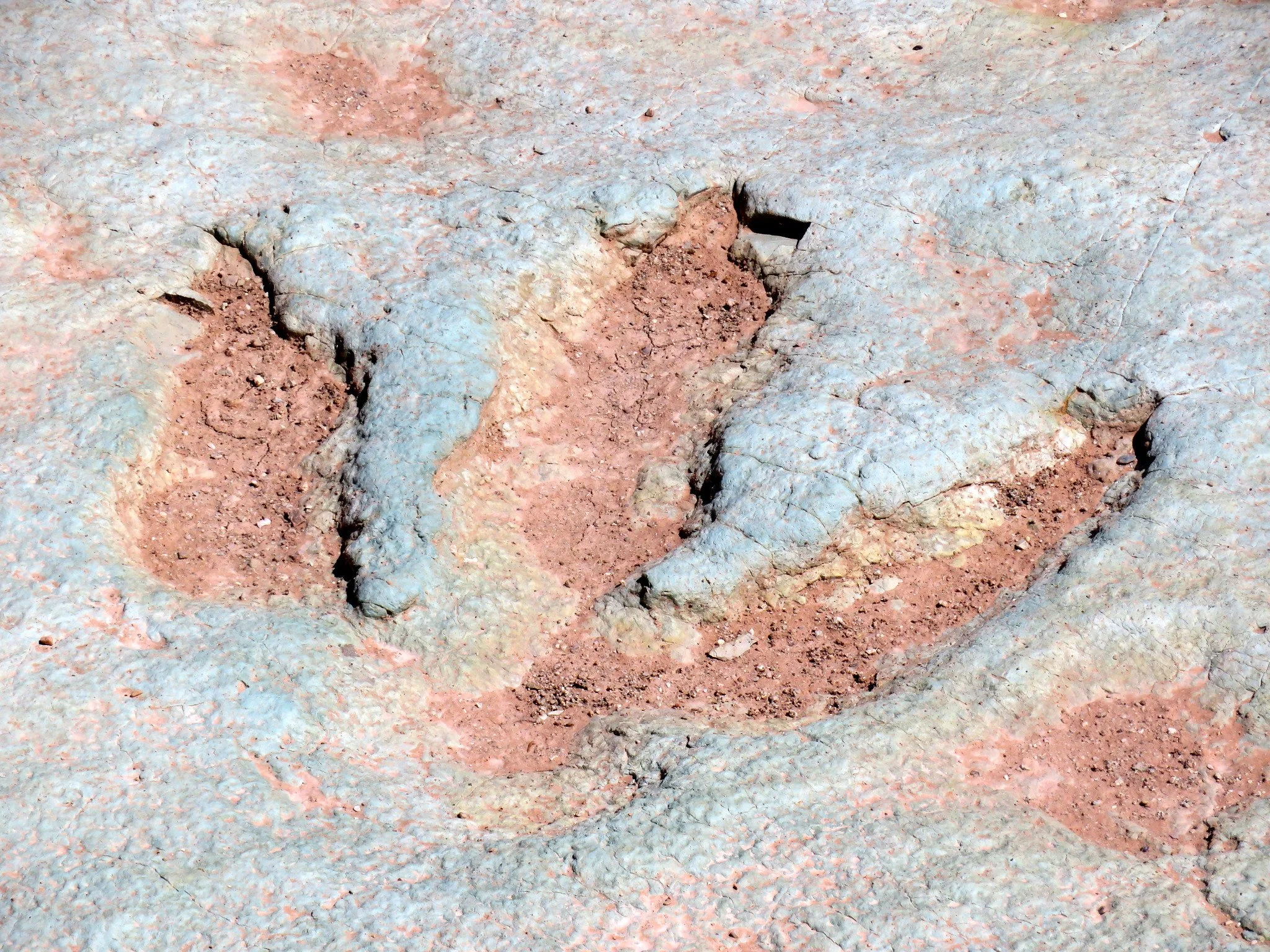
A theropod track preserved in a microbial mat feature within the Ruby Ranch Member of the Cedar Mountain Formation. Photo by Ryan Baxter.